If there is any religious scripture which gives me strength and brings me joy then it must be these three important texts, Gospel of Truth, Gospel of Philip and the Ishavasya Upanishad. I know nothing of Hinduism and Christianity apart from these three works and I don't have to seek further because I am at rest now.
"The Father opens his bosom, but his bosom is the Holy Spirit. He reveals his hidden self which is his son, so that through the compassion of the Father the Aeons may know him, end their wearying search for the Father and rest themselves in him, knowing that this is rest."
- Gospel of Truth
None of the Gospels in my opinion ever explained clearly as to who Christ was other than the Gospel of Truth.
"He is the shepherd who left behind the ninety-nine sheep which had not strayed and went in search of that one which was lost. He rejoiced when he had found it."
- Gospel of Truth
Not only it is the Gospel which revealed who Christ was, it is also the only Gospel which explains about the origin of sin and ignorance.
"This ignorance of the Father brought about terror and fear. And terror became dense like a fog, that no one was able to see. Because of this, error became strong. But it worked on its hylic substance vainly, because it did not know the truth. It was in a fashioned form while it was preparing, in power and in beauty, the equivalent of truth. This then, was not a humiliation for him, that illimitable, inconceivable one. For they were as nothing, this terror and this forgetfulness and this figure of falsehood, whereas this established truth is unchanging, unperturbed and completely beautiful.
For this reason, do not take error too seriously."
- Gospel of Truth
The root cause of all sin in humanity is this, ignorance of the Father, ignorant of where we came from and where we are going. Gospel of Truth is the only Gospel or the only work in the western literature where it's author has got the ontology of God absolutely right, which cannot be found in any one of the works of western theologians like Cicero or Thomas Aquinas, none of the western theologians or philosophers have got the ontology of God right apart from the author of Gospel of Truth.
The author of Gospel of truth was neither a theologian,nor a metaphysician or a philosopher, for if he was any one of them, even he, like others would fail to know the ontology of God but he was a pneumatic who had faith in the pneumatic Christ and hence he received the grace of the Father and was brought into the place of rest.
"Such is the place of the blessed; this is their place. As for the rest, then, may they know, in their place, that it does not suit me, after having been in the place of rest to say anything more. But he is the one in whom I shall be in order to devote myself, at all times, to the Father of the All and the true brothers, those upon whom the love of the Father is lavished, and in whose midst nothing of him is lacking. It is they who manifest themselves truly since they are in that true and eternal life and speak of the perfect light filled with the seed of the Father, and which is in his heart and in the Pleroma, while his Spirit rejoices in it and glorifies him in whom it was, because the Father is good. And his children are perfect and worthy of his name, because he is the Father. Children of this kind are those whom he loves."
- Gospel of Truth
The verse which reveals the ontology of God in Gospel of Truth is this-
"It was a great wonder that Aeons were in the Father without being acquainted with him and that they alone were able to emanate in as much as they were not able to perceive and recognize the one in whom they were."
- Gospel of Truth
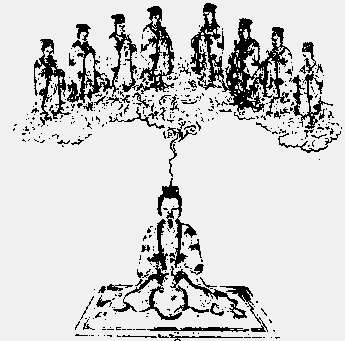
All the Aeons are Pleromas by themselves and all of them reside in the Father and form his body. For this important reason the Vedic Aryans divided the vedic worship into two forms called the Vishrutha and the Samasthi forms. In the Vishrutha form of Vedic worship they worshipped the each individual Aeon who had emanated from the Father and glorified each of the Aeons describing their nature and appearance i.e. their ontology in the form of mantras and in the Samasthi form of Vedic worship they worshipped the one Father, (Savithru, Sun God) as a whole containing all the Aeons with in him.
This is the reason why I love the Gospel of Truth so much, because no where the ontology of God is so well explicitly expressed other than here.
The author of the book - "The Spiritual Seed - The Church of the Valentinians", Einar Thomassen said,
"not every time he (Valentinus) sat down to write a gospel (Gospel of Truth) where he was going to throw in all the cosmology and cosmogony and theogony."
Next we move on to an another remarkable work which is the Ishavasya Upanishad.
The author of this Upanishad is the great sage, Yagnavalkya. Many westerners quote the dialogue between Yagnavalkya and Maitreyi and defend the philosophy of Advaita which is quite good but very few people know as to how this Upanishad came about. That's a big story though and if you are interested you can read the full biography of Yagnavalkya
here or a shorter version of it from
wiki.
"Then Yājñavalkya determined not to have any human guru thereafter. Thus he began to propitiate the Sun God, Surya. Yājñavalkya worshipped and extolled the Sun, the master of the Vedas, for the purpose of acquiring the fresh Vedic portions not known to his preceptor, Vaiśampāyana.[5]
The Sun God, pleased with Yājñavalkya penance, assumed the form of a horse and graced the sage with such fresh portions of the Yajurveda as were not known to any other. This portion of the Yajurveda goes by the name of Śukla Yajurveda or White-Yajurveda on account of it being revealed by Sun. It is also known as Vajasaneya Yajurveda, because it was evolved in great rapidity by Sun who was in the form of a horse through his manes.The rhythm of recital of these vedas is therefore to the rhythm of the horse canter and distinguishes itself from the other forms of veda recitals. In Sanskrit, term "Vaji" means horse."
As it is clearly stated Yajnavalkya extolled the Sun God, the master of the Vedas and the Sun god, through Yajnavalkya gave the ShuklayajurVeda and the Ishavasya Upanishad to the world. How foolish or moronish it is to say that the philosophy of Advaita is the death of Gods, no my dear westerners it is actually the return of the Gods. Gnostic Christianity, Advaita, Taoism and Tibetan Buddhism makes absolutely no sense without the Aeons or Gods. I am least concerned about making my views rational or scientific, that is not important for me, what is important for me is to ensure that these sensitive traditions do not get misrepresented in the hands of western metaphysicians, scholars and philosophers. It is nothing but scholarly prejudice.
The scientific method is not the correct way to study these traditions, I think all scholars or philosophers in this field must adopt "sympathetic empiricism", a term coined by Arthur Versluis, as the main methodology to study these traditions because this is not religion or science, this is Esotericism and in Esotericism there will be always those who study these traditions purely from an academic viewpoint and those who study these traditions from a traditional viewpoint and in order to experience an elitist phenomena such as Esotericism it is important for the scholars or the researchers to participate to some extent in the traditions which they study.
“While I am convinced of the critical importance of historiography in the study of esotericism (and for this reason all of my academic books are firmly grounded in historical method) I do not believe that historiography is adequate in itself to convey the complex, multivalent nature of esoteric thought, traditions, or most of all, experience. Esotericism, given all its varied forms and its inherently multidimensional nature, cannot be conveyed without going beyond purely historical information: at minimum, the study of esotericism, and in particular mysticism, requires some degree of imaginative participation in what one is studying.”
- Arthur Versluis
We are least concerned about the historical Buddha or the historical Jesus, we don't care when Jesus was born, whether he was born on 25th of December or some other day it is of least interests to us, what happened to him between the years 12 to 30, again we don't care. Some say, "Paul never met Jesus and hence his teachings are not authoritative." Yes he never met Jesus, so what? Saint Paul directly received the Pleromic revelation from the pneumatic Christ, this is what is important to us. 'The Christ in you'.
Most westerners think that it was Shankara of the 8th century who established the Advaita philosophy which is wrong, the philosophy of Advaita was already fully established by the Vedic Seers, what Shankara did in the 8th century was he took us out from the repeated onslaught of Buddhist influence and re-established the philosophy of Advaita by writing commentaries on Brahma Sutras and by travelling through out India. It is for this reason he dis-agreed with his teacher Gaudapada (on minute points) who was highly influenced by Buddhism and Shankara went his own way and re-established the philosophy of Advaita.
But the influence of Buddhist ideas was too strong even for someone like Shankara and for this reason though knowingly or unknowingly he did not fully expressed or captured the full meaning of the Ishavasya Upanishad. This criticism against Shankara can be found in the voluminous works of the mystic Aurobindo.
"The main obstacle that stands in the way of accepting the straight forward meaning of the Isha Upanishad and rightly understanding its inner truth about the Brahman, the Self and the Divine, is Mayavada, Illusionism, preached by Shankaracharya and the commentary he wrote on this Upanishad. The one-pointed drive towards withdrawal that is Illusionism and the much-praised inaction of the Sannyasi are completely at variance with the Isha Upanishad. If the meaning of the slokas is strained and tortured to give an opposite sense, the solution of this quarrel becomes impossible. The Upanishad in which it is written: “Doing verily works in this world one should wish to live a hundred years”, and again: “Action cleaves not to a man” — the Upanishad which proclaims with courage: “Into a blind darkness they enter who follow after the Ignorance, they as if into a greater darkness who devote themselves to the Knowledge alone”; and again says: “By the Birth one enjoys Immortality”, how can that Upanishad be reconciled with Mayavada, Illusionism and the path of withdrawal? A highly erudite person, who was possibly the chief sponsor of Monism in South India after Shankara, expunged it from the list of the twelve Upanishads and installed the Nrisimhatapini in its place. Shankaracharya was not so daring as to alter the prevailing canon. The Upanishad was a “Sruti” (heard scripture), and Illusionism was a subject for inquiry in the “Sruti” and as such, he assumed, the meaning of the “Sruti” could not but be favourable to real Illusionism."
- Aurobindo, Ishavasya Upanishad
"The Isha Upanishad introduces to us the integral spiritual realisation and the principle of the integral yoga; within a short space it resolves many difficult problems. It is a śruti replete with sublime, profound and fathomless significances. This Upanishad, concluded in eighteen slokas, explains in these small mantras many major truths of the world. Such “infinite riches in a little room” can be found only in this śruti."
- Aurobindo
Aurobindo has written a full commentary on the Ishavasya Upanishad, interested readers can do a simple google search and find his works.
This is an very important verse for me, this is the 15th verse of the Isha Upanishad, it is a very short Upanishad with just 18 verses in it. Here Pushan means the Sun God and the golden disc is his divine light rays emanating from his anthropomorphic body, as I said already all the Aeons reside in him and form his body, in that each individual light ray is an Aeon, so when I say all the Aeons reside in the Father it doesn't mean they reside with him holding an anthropomorphic form instead they reside in the Father as a form of light rays and when these Aeons are studied individually they appear as anthropormorphic forms. The seer having seen the Father pleads him to reduce the intensity of the light rays which is emanating from his body so that he can clearly see him and become one with him so that he can know the truth and lead a righteous life.
One cannot lead a righteous life without knowing the Father, how can one lead a life of righteousness if truth is not rent in him.
"People cannot see anything in the real realm unless they become, if you have seen Christ, you have become Christ, if you have seen the spirit you have become the spirit, if you have seen the Father you will become the Father"
- Gospel of Truth