Whatever is in the Vedas is in the esoteric message of Saint Paul. Defending Pauline Christianity is more important to me than defending the Vedas because explaining Pauline Christianity to the common masses is fairly easy compared to the incomprehensible Sanskrit verses of the Vedas.
One might be wondering how is that the founder of a mono-theistic religion has any connections with a hard-polytheistic pagan religion. There is indeed a connection and the connection is the Pauline idea of Pleroma. The connection does not end with Paul's Pleroma theology but Paul's idea of election, predestination, his emphasis on spiritual resurrection over bodily resurrection, the way he said it is sown as a natural body and raised as a spiritual body, his stance on grace over faith, lawless over works of law are all welcoming to Vedic ecclesia.
I love what Paul is preaching because the Vedic doctrines are identical with Pauline doctrines. I would back Paul on any day.
The Supreme Lord is situated in everyone's heart, O Arjuna, and is directing the wanderings of all living entities, who are seated as on a machine, made of the material energy.
Where then is boasting? when work has been given free to us. We have no free will whatsoever. Eve had no choice whatsoever whether to eat the forbidden fruit or not instead she was preordained and predestined to eat it. The Calvinists were right. Its hard for people to accept this because their very existence is at stake here, the truth is we are not this body instead we are all spirit and nothing whatever happens in this world will affect the spirit. Do not boast about what do you have and do not mourn about what you have lost because none of the things in this world are yours. You are not in control of your lives. Your future is already out there and you cannot shape your own future.
Your ego is your God who is doing all the activities, the demon of Rene Descartes who is deceiving us into believing in the existence of this world and deceiving into believing that we are acting on our own. The day you realize this you will know that you do not belong here that you are nothing but just spirit and even equal with God.
I'm studying Yajur Veda in my leisure time as I love the Shukla Yajur Veda tradition or the Vajasaneyi Samhita which is the tradition of the great sage Yajnavalkya who gave the Isha Upanishad to the world. Actually there are two Yajur vedas, Black Yajur Veda also known as Taittariya Samhitha or Krishna (Krishna means Black) YajurVeda from the Vaishampayana school and White Yajurveda also known as Vajasaneyi Samhita or Shukla Yajur Veda from the Yajnavalkya school. There is a story on the origin of the two Yajur Vedas and here is how it goes:
According to traditional accounts, Yājñavalkya was the son of Devarāta and was the pupil of sage Vaisampayana. Once, Vaisampayana got angry with Yājñavalkya as the latter argued too much to separate some latter additions to Yajurveda in being abler than other students. The angry teacher asked his pupil Yājñavalkya to give back all the knowledge of Yajurveda that he had taught him.
As per the demands of his Guru, Yājñavalkya vomited all the knowledge that he acquired from his teacher in form of digested food. Other disciples of Vaisampayana took the form of partridge birds and consumed the digested knowledge (a metaphor for knowledge in its simplified form without the complexities of the whole but the simplicity of parts) because it was knowledge and they were very eager to receive the same.
The Saṃskṛt name for partridge is "Tittiri". As the Tittiri (partridge) birds ate this Veda, it is thenceforth called the Taittirīya Yajurveda. It is also known as Kṛṣṇa Yajurveda or Black-Yajurveda on account of it being a vomited substance. The Taittirīya Saṃhitā thus belongs to this Yajurveda.
Then Yājñavalkya determined not to have any human guru thereafter. Thus he began to propitiate the Sun God, Surya. Yājñavalkya worshipped and extolled the Sun, the master of the Vedas, for the purpose of acquiring the fresh Vedic portions not known to his preceptor, Vaiśampāyana.
The Sun God, pleased with Yājñavalkya's penance, assumed the form of a horse and graced the sage with such fresh portions of the Yajurveda as were not known to any other. This portion of the Yajurveda goes by the name of Śukla Yajurveda or White-Yajurveda on account of it being revealed by Sun. It is also known as Vajasaneya Yajurveda, because it was evolved in great rapidity by Sun who was in the form of a horse through his manes.The rhythm of recital of these vedas is therefore to the rhythm of the horse canter and distinguishes itself from the other forms of veda recitals. In Sanskrit, term "Vaji" means horse. Yājñavalkya divided this Vajasaneya Yajurveda again into fifteen branches, each branch comprising hundreds of Yajus Mantras. Sages like Kanva, Madhyandina and others learnt those and Śukla Yajurveda branched into popular recensions named after them.
It is important to note that within the hierarchy of Brāhmaṇas, certain sects believe in the Kṛṣṇa Yajurveda while others practice from the Śukla Yajurveda.
Yājñavalkya married two wives. One was Maitreyi and the other Katyaayanee. Of the two, Maitreyi was a Brahmavadini (one who is interested in the knowledge of Brahman).The descendant sects of Brahmans are the progeny of the first wife Katyaayanee. When Yājñavalkya wished to divide his property between the two wives, Maitreyi asked whether she could become immortal through wealth. Yājñavalkya replied that there was no hope of immortality through wealth and that she would only become one among the many who were well-to-do on. When she heard this, Maitreyi asked Yājñavalkya to teach her what he considered as the best. Then Yājñavalkya described to her the greatness of the Absolute Self, the nature of its existence, the way of attaining infinite knowledge and immortality, etc. This immortal conversation between Yājñavalkya and Maitreyi is recorded in the Brihadaranyaka Upanishad.
Yajnavalkya teaches Brahma Vidya to King Janaka.
Wisdom of Yājñavalkya is shown in Brhadaranyaka Upanishad where he gives his teachings to his wife Maitreyi and King Janaka. He also participates in a competition arranged by King Janaka about the selecting great Brhama Jnani (knower of Brahman). His intellectual dialogues with Gargi (a learned scholar of the times) form a beautiful chapter filled with lot of philosophical and mystical question-answers in Brhadaranyaka Upanishad. He was then praised as the greatest Brahmajnyani by all the sages at the function organised by king Janaka. In the end, Yājñavalkya took Vidvat Sanyasa (renunciation after the attainment of the knowledge of Brahman) and retired to the forest.
The proto Indo-Iranian religion started off as Sun Worship.
- Max Mueller
The tradition of Shukla Yajur Veda worships Savitr as Brahman and the Rishi of this tradition is the great sage Yajnavalkya who extolled the Sun God and received such fresh portions of the Vedas which was not known to anyone before. The famous Ishavasya Upanishad is from this tradition which contains with in itself the ultimate truth of the universe and a pathway to know Brahman.
The Sun God will be very pleased if one gives up Sankalpa and does unselfish holistic worship to him. The greatest mystery which is so astonishing is the truth that all other gods exists in his womb and form his body, this is the reason why he is called as Hiranyagarbha, the golden egg, (garbha means womb or egg). Each individual light ray emanating from his body is an individual god, this is baffling and one can experience it by sincere devotion and worship to him. Scientists and atheists are ignorant of this and they are taking the world in the wrong direction. For those who have not gone through upanayana rituals like me i.e. not Brahmins by birth they can do Surya Namaskara or Sun Salutations along with silent utterance of mantras in the mind you will soon see the benefits yourself.
The Lord Savitr is indeed the Supreme Lord of the universe and the more we dig deeper in history the more we acknowledge that everything is pointing to this God. I should say even science is pointing to this God but many people don't see it because of bad scholarship and bad education system. Sun God is not a jealous god he is the most ancient of all gods. He is Brahma, Vishnu and Shiva as it is stated in the Adithya Hrudyam. He is the Prajapathi of the Brahmanas and the Brahman of the Upanishads. He embraces Jesus and Buddha too and if one studies Gnostic Christianity and Vajrayana Buddhism you will wonder whether they were also worshiping the same Father. We ourselves don't know what secrets is hidden in him and what secrets he will reveal to all serious followers of Sauram.
He is the god whom Julian the Emperor extols in his Hymn to King Helios. Helios-Aion-Mithras, the god mentioned in Mithras Lithurgy is the same Sun god, Savitr. He is Sol Invictus, the Invincible, the unconquered sun. He is the Holy Father of the Gnostics and the one who sent the Saviour to earth who came down in the form of a dove on to Jesus Christ's body at the time of his Baptism. Jesus Christ was sent by the Demiurge, Jehovah but the Saviour was sent by the Holy Father, Savitr from the above Pleroma. Its so disappointing that this pagan religion is not known to many people and academic scholars don't interpret the Vedas in this light.
Its true that as the Gnostic Christians of the 2nd century say that before Jesus Christ came down to earth all the people of the world were worshiping the creator who is a lesser god and not the true god of the cosmos. The Saviour saved the world from the evil Archons by giving us the gnosis of the Father of Truth. The Archons of the world whose leader is the Devil, the fallen angel, Lucifer who is actually also a son of the Demiurge (Jehovah), got angry, jealous and murdered Jesus Christ. But there was one tribe who were worshiping the Father of Truth even before since the time Jesus Christ came down to earth and that tribe was none other than the Indo-Persian Aryans who heavily influenced Neoplatonists like Proclus, Iamblichus, Julian, Ammonius Saccus etc through the Chaldean Oracles.
Below is a list of Vedic verses extolling the God Savitr. All other Vedic gods like Pushan, Surya, Bhaga, Mitra, Agni, Soma, Indra, Varuna, Aruna, Bhaga, Usha, Gayatri, Ashvins emanate from this one God. I have included verses only from the Rig Veda here but this God is extolled and revered by the Aryans in all of the Vedas from Sama Veda to Atharvana Veda and from Black Yajurveda to White Yajurveda.
1 AGNI I first invoke for our
prosperity; I call on Mitra, Varuṇa, to aid us here.
I call on
Night who gives rest to all moving life; I call on Savitar the God to
lend us help.
2 Throughout the dusky firmament advancing, laying
to rest the immortal and the mortal,
Borne in his golden chariot
he cometh, Savitar, God who looks on every creature.
3 The God
moves by the upward path, the downward; with two bright Bays,
adorable, he journeys.
Savitar comes, the God from the far
distance, and chases from us all distress and sorrow.
4 His
chariot decked with pearl, of various colours, lofty, with golden
pole, the God hath mounted,
The many-rayed One, Savitar the holy,
bound, bearing power and might, for darksome regions.
5 Drawing
the gold-yoked car his Bays, white-footed, have manifested light to
all the peoples.
Held in the lap of Savitar, divine One, all men,
all beings have their place for ever.
6 Three heavens there are;
two Savitar's, adjacent: in Yama's world is one, the home of
heroes,
As on a linch-pin, firm, rest things immortal: he who hath
known it let him here declare it.
7 He, strong of wing, hath
lightened up the regions, deep-quivering Asura, the gentle
Leader.
Where now is Sūrya, where is one to tell us to what
celestial sphere his ray hath wandered?
8 The earth's eight points
his brightness hath illumined, three desert regions and the Seven
Rivers.
God Savitar the gold-eyed hath come hither, giving choice
treasures unto him who worships.
9 The golden-handed Savitar,
far-seeing, goes on his way between the earth and heaven,
Drives
away sickness, bids the Sun approach us, and spreads the bright sky
through the darksome region.
10 May he, gold-handed Asura, kind
Leader, come hither to us with his help and favour.
Driving off
Rākṣasas and Yātudhānas, the God is present, praised in hymns at
evening.
11 O Savitar, thine ancient dustless pathways are well
established in the air's mid-region:
O God, come by those paths so
fair to travel, preserve thou us from harm this day, and bless us.
- Rig Veda Book 1, HYMN XXXV. Savitar.
1. UPRISEN is Savitar, this God, to quicken, Priest who neglects not this most constant duty.
To the Gods, verily, he gives rich treasure, and blesses him who calls them to the banquet.
2 Having gone up on high, the God broad-handed spreads his arms widely forth that all may mark him.
Even the waters bend them to his service: even this wind rests in the circling region.
3 Though borne by swift steeds he will yet unyoke them: e’en the fleet chariot hath he stayed from going.
He hath checked e’en their haste who glide like serpents. Night closely followed Savitar's dominion.
4 What was spread out she weaves afresh, re-weaving: the skilful leaves his labour half-completed.
He hath arisen from rest, and parted seasons: Savitar hath approached, God, holy-minded.
5 Through various dwellings, through entire existence, spreads, manifest, the household light of Agni.
The Mother gives her Son the goodliest portion, and Savitar hath sped to meet his summons.
6 He comes again, unfolded, fain for conquest: at home was he, the love of all things moving.
Each man hath come leaving his evil doings, after the Godlike Savitar's commandment.
7 The wild beasts spread through desert places seeking their watery share which thou hast set in waters.
The woods are given to the birds. These statutes of the God Savitar none disobeyeth.
8 With utmost speed, in restless haste at sunset Varuṇa seeks his watery habitation.
Then seeks each bird his nest, each beast his lodging. In due place Savitar hath set each creature.
9 Him whose high law not Varuṇa nor Indra, not Mitra, Aryaman, nor Rudra breaketh,
Nor evil-hearted fiends, here for my welfare him I invoke, God Savitar, with worship.
10 May they who strengthen bliss, and thought and wisdom, and the Dames’ Lord and Narāśaṁsa aid us.
That good may come to us and wealth be gathered, may we be Savitar the God's beloved.
11 So come to us our hearts' desire, the bounty bestowed by thee, from heaven and earth and waters,
That it be well with friends and those who praise thee, and, Savitar, with the loud-lauding singer.
- Rig Veda Book2, HYMN XXXVIII. Savitar.
1. Now must we praise and honour Savitar the God: at this time of
the day the men must call to him,
Him who distributes wealth to
Manu's progeny, that he may grant us here riches most excellent.
2
For thou at first producest for the holy Gods the noblest of all
portions, immortality:
Thereafter as a gift to men, O Savitar,
thou openest existence, life succeeding life.
3 If we, men as we
are, have sinned against the Gods through want of thought, in
weakness, or through insolence,
Absolve us from the guilt and make
us free from sin, O Savitar, alike among both Gods and men.
4 None
may impede that power of Savitar the God whereby he will maintain the
universal world.
What the fair-fingered God brings forth on
earth's expanse or in the height of heaven, that work of his stands
sure.
5 To lofty hills thou sendest those whom Indra leads, and
givest fixed abodes with houses unto these.
However they may fly
and draw themselves apart, still, Savitar, they stand obeying thy
behest.
6 May the libations poured to thee thrice daily, day after
day, O Savitar, bring us blessing.
May Indra, Heaven, Earth,
Sindhu with the Waters, Aditi with Ādityas, give us shelter.
- Rig Veda Book 4, HYMN LIV. Savitar.
1. THE priests of him the lofty Priest well-skilled in hymns
harness their spirit, yea, harness their holy thoughts.
He only
knowing works assigns their priestly tasks. Yea, lofty is the praise
of Savitar the God.
2 The Sapient One arrays himself in every
form: for quadruped and biped he hath brought forth good.
Excellent
Savitar hath looked on heaven's high vault, and shineth after the
outgoing of the Dawn.
3 Even he, the God whose going-forth and
majesty the other Deities have followed with their might,
He who
hath measured the terrestrial regions out by his great power, he is
the Courser Savitar.
4 To the three spheres of light thou goest,
Savitar, and with the rays of Sidrya thou combinest thee.
Around,
on both sides thou encompassest the night: yea, thou, O God, art
Mitra through thy righteous laws.
5 Over all generation thou art
Lord alone: Pūṣan art thou, O God, in all thy goings-forth.
Yea,
thou hast domination over all this world. Śyāvāśva hath brought
praise to thee, O Savitar,
- Rig Veda Book 5, HYMN LXXXI. Savitar.
1. WE crave of Savitar the God this treasure much to be
enjoyed.
The best, all-yielding, conquering gift of Bhaga we would
gladly win.
2 Savitar's own supremacy, most glorious and beloved
of all,
No one diminisheth in aught.
3 For Savitar who is Bhaga
shall send riches to his worshipper.
That wondrous portion we
implore.
4 Send us this day, God Savitar, prosperity with
progeny.
Drive thou the evil dream away.
5 Savitar, God, send
far away all sorrows and calamities,
And send us only what is
good.
6 Sinless in sight of Aditi through the God Savitar's
influence,
May we obtain all lovely things.
7 We with our hymns
this day elect the general God, Lord of the good,
Savitar whose
decrees are true.
8 He who for ever vigilant precedes these Twain,
the Day and Night,
Is Savitar the thoughtful God.
9 He who
gives glory unto all these living creatures with the song,
And
brings them forth, is Savitar.
- Rig Veda Book 5, HYMN LXXXII. Savitar.
1. FULL of effectual wisdom Savitar the God hath stretched out
golden arms that he may bring forth life.
Young and most skilful,
while he holds the region up, the Warrior sprinkles fatness over both
his hands.
2 May we enjoy the noblest vivifying force of Savitar
the God, that he may give us wealth:
For thou art mighty to
produce and lull to rest the world of life that moves on two feet and
on four.
3 Protect our habitation, Savitar, this day, with
guardian aids around, auspicious, firm and true.
God of the golden
tongue, keep us for newest bliss: let not the evil-wisher have us in
his power.
4 This Savitar the God, the golden-handed, Friend of
the home, hath risen to meet the twilight.
With cheeks of brass,
with pleasant tongue, the Holy, he sends the worshipper rich gifts in
plenty.
5 Like a Director, Savitar hath extended his golden arms,
exceeding fair to look on.
He hath gone up the heights of earth
and heaven, and made each monster fall and cease from troubling.
6
Fair wealth, O Savitar, to-day, to-morrow, fair wealth produce for us
each day that passes.
May we through this our song be happy
gainers, God, of a fair and spacious habitation.
- Rig Veda Book 6, HYMN LXXI. Savitar.
1. SAVITAR, golden-haired, hath lifted eastward, bright With the
sunbeams, his eternal lustre;
He in whose energy wise Pūṣan
marches, surveying all existence like a herdsman.
2 Beholding men
he sits amid the heaven filling the two world-halves and air's wide
region.
He looks upon the rich far-spreading pastures between the
eastern and the western limit.
3 He, root of wealth, the
gatherer-up of treasures, looks with his might on every form and
figure.
Savitar, like a Godẉhose Law is constant, stands in the
battle for the spoil like Indra.
4 Waters from sacrifice came to
the Gandharva Visvavasu, O Soma, when they saw him.
Indra,
approaching quickly, marked their going, and looked around upon the
Sun's enclosures.
5 This song Visvavasu shall sing us, meter of
air's mid-realm celestial Gandharva,
That we may know aright both
truth and falsehood: may he inspire our thoughts and help our
praises.
6 In the floods' track he found the bootyseeker: the
rocky cow-pen's doors he threw wide open.
These, the Gandharva
told him, Rowed with Amṛta. Indra knew well the puissancc of the
dragons.
- Rig Veda Book 10, HYMN CXXXIX. Savitar.
1. SAVITAR fixed the earth with bands to bind it, and made heaven
stedfast where no prop supported.
Savitar milked, as ’twere a
restless courser, air, sea bound fast to what no foot had trodden.
2
Well knoweth Savitar, O Child of Waters, where ocean, firmly fixt,
o’erflowed its limit.
Thence sprang the world, from that uprose
the region: thence heaven spread out and the wide earth expanded.
3
Then, with a full crowd of Immortal Beings, this other realm came
later, high and holy.
First, verily, Savitar's strong-pinioned
Eagle was born: and he obeys his law for ever.
4 As warriors to
their steeds, kine to their village, as fond milk giving cows
approach their youngling,
As man to wife, let Savitar come
downward to us, heaven's bearer, Lord of every blessing.
5 Like
the Aṅgirasa Hiranvastupa, I call thee, Savitar, to this
achievement:
So worshipping and lauding thee for favour I watch
for thee as for the stalk of Soma.
- Rig Veda Book 10, HYMN CXLIX. Savitar.
1. MAY the God Savitar, rich in goodly treasures, filling the
region, borne by steeds, come hither,
In his hand holding much
that makes men happy, lulling to slumber and arousing creatures.
2
Golden, sublime, and easy in their motion, his arms extend unto the
bounds of heaven.
Now shall that mightiness of his he lauded: even
Sūrya yields to him in active vigour.
3 May this God Savitar, the
Strong and Mighty, the Lord of precious wealth, vouchsafe us
treasures.
May he, advancing his far-spreading lustre, bestow on
us the food that feedeth mortals.
4 These songs praise Savitar
whose tongue is pleasant, praise him whose arms are full, whose hands
are lovely.
High vital strength, and manifold, may he grant us.
Preserve us evermore, ye Gods, with blessings.
- Rig Veda Book 7, HYMN XLV. Savitar.
1 HIS bright rays bear him up aloft,
the God who knoweth all that lives,
Sūrya, that all may look on
him.
2 The constellations pass away, like thieves, together with
their beams,
Before the all-beholding Sun.
3 His herald rays
are seen afar refulgent o’er the world of men,
Like flames of
fire that burn and blaze.
4 Swift and all beautiful art thou, O
Sūrya, maker of the light,
Illuming all the radiant realm.
5
Thou goest to the hosts of Gods, thou comest hither to
mankind,
Hither all light to be beheld.
6 With that same eye of
thine wherewith thou lookest brilliant Varuṇa,
Upon the busy
race of men,
7 Traversing sky and wide mid-air, thou metest with
thy beams our days,
Sun, seeing all things that have birth.
8
Seven Bay Steeds harnessed to thy car bear thee, O thou farseeing
One,
God, Sūrya, with the radiant hair.
9 Sūrya hath yoked
the pure bright Seven, the daughters of the car; with these,
His
own dear team, he goeth forth.
10 Looking upon the loftier light
above the darkness we have come
To Sūrya, God among the Gods, the
light that is most excellent.
11 Rising this day, O rich in
friends, ascending to the loftier heaven,
Sūrya remove my heart's
disease, take from me this my yellow hue.
12 To parrots and to
starlings let us give away my yellowness,
Or this my yellowness
let us transfer to Haritāla trees.
13 With all his conquering
vigour this Āditya hath gone up on high,
Giving my foe into mine
hand: let me not be my foeman's prey.
Rig Veda Book 1, HYMN L. Sūrya.
1. THE brilliant presence of the Gods hath risen, the eye of
Mitra, Varuṇa and Agni.
The soul of all that moveth not or
moveth, the Sun hath filled the air and earth and heaven.
2 Like
as a young man followeth a maiden, so doth the Sun the Dawn,
refulgent Goddess:
Where pious men extend their generations,
before the Auspicious One for happy fortune.
3 Auspicious are the
Sun's Bay-coloured Horses, bright, changing hues, meet for our shouts
of triumph.
Bearing our prayers, the sky's ridge have they
mounted, and in a moment speed round earth and heaven.
4 This is
the Godhead, this might of Sūrya: he hath withdrawn what spread o’er
work unfinished.
When he hath loosed his Horses from their
station, straight over all Night spreadeth out her garment.
5 In
the sky's lap the Sun this form assumeth that Varuṇa and Mitra may
behold it.
His Bay Steeds well maintain his power eternal, at one
time bright and darksome at another.
6 This day, O Gods, while
Sūrya is ascending, deliver us from trouble and dishonour.
This
prayer of ours may Varuṇa grant, and Mitra, and Aditi and Sindhu,
Earth and Heaven.
- Rig Veda Book 1, HYMN CXV. Sūrya.
1. STRONG Pūṣan's majesty is lauded evermore, the glory of his
lordly might is never faint, his song of praise is never
faint.
Seeking felicity I laud him nigh to help, the source, of
bliss,
Who, Vigorous one, hath drawn to him the hearts of all,
drawn them, the Vigorous One, the God.
2 Thee, then, O Pūṣan,
like a swift one on his way, I urge with lauds that thou mayst make
the foemen flee, drive, camel-like, our foes afar.
As I, a man,
call thee, a God, giver of bliss, to be my Friend,
So make our
loudly-chanted praises glorious, in battles make them glorious.
3
Thou, Pūṣan, in whose friendship they who sing forth praise enjoy
advantage, even in wisdom, through thy grace, in wisdom even they are
advanced.
So, after this most recent course, we come to thee with
prayers for wealth.
Not stirred to anger, O Wide-Ruler, come to
us, come thou to us in every fight.
4 Not stirred to anger, come,
Free-giver, nigh to us, to take this gift of ours, thou who hast
goats for steeds, Goat-borne! their gift who long for fame.
So,
Wonder-Worker! may we turn thee hither with effectual lauds.
I
slight thee not, O Pūṣan, thou Resplendent One: thy friendship may
not be despised.
As someone who was brought up in an Hindu atmosphere and as someone who has watched them closely and having read their scriptures, for the most part I am extremely sympathetic to the above article and in way completely agree if not fully to the contents of that article. I am not a Hindu. Does anyone know what does it mean to be a Hindu? Gosh, Hinduism is worse than atheism, at least atheism has a clear cut definition but Hinduism doesn't even have one, throw a thread to define Hinduism you'll get as many definitions as the number of heads you can count.
A common saying among Indians is that Hinduism is a way of life, what nonsense!, even pigs and dogs have a way of life, what does it mean to be a Hindu? what do we believe in? what are our core values? how should we conduct? what is our goal? which scriptures do we accept as the true words of our gods? and which scriptures do we reject?
Any attempts to answer those questions will be deemed as let's not go the Abrahamic way or will get segregated into different sects for ever fucking differences imaginable or the real answer will be pushed under the carpet by stating all paths will lead to the same truth which is fucking bullshit.
"The reality is that few people reject the indoctrination they received from their parents. They don't adopt a radically different religion or philosophy. They don't risk being ostracised by their friends, family and community. When they realise that their religion is false, the vast majority react by adopting various coping mechanisms. For example, they pretend that they are still true believers. They know all the things they are expected to say and do, so they keep saying and doing them, albeit without any enthusiasm now. Or they enter a state of denial, or doublethink. A few even become more zealous believers than they ever were before, in the hope that if they fanatically re-embrace their beliefs they will somehow dispel the unbelief that now plagues them."
- Author of Illuminati, New World Order, Armageddon Conspiracy
Vishnu is a minor god in the Vedas.
"In the Indo-European myth of the old gods and the new gods, the Vedic gods would be the old gods. The new gods are those of the offshoot religions. Rather than fight the old gods, the new gods have created new myths which ignore many of the old gods. This results in the vast majority of the old gods being forgotten with the remaining being demoted to lesser beings. The vast majority of Vedic gods are no longer worshipped. The exception to this is Vsnu.
Vsnu is a Vedic god and he did make it over to Hinduism favourably. Unfortunately, the Vsnu of Hindu lore is not the Vsnu of Vedic lore. The same is said of Surya, Usas and Sarsvati. Surya now has a very minor role, the brilliance of his consort Usas is all but forgotten in favour of Kali, Laxmi and Durga. Sarsvati, who was a minor river goddess deity in the Vedas, is seen as a major goddess of learning in Hinduism having swallowed up the Vedic goddess Vac."
Why don't we have a festival for Indra or Mitra rather than celebrating Ganesh Chathurti? Why don't we have statues for Agni and Soma? Why not for Savitr? Its quite simple Vedic rishis were not idolaters. They practised inner yajna or Theurgy which Hindus have forgotten. This does not mean we shouldn't have any festivals or remembrance for the old gods but the vast majority of the Hindus are ignorant of their own history.
Hindus have got nothing to be proud of and all their boasting about their culture is just bullshit. Vedas have got nothing to do with Modern Science. Isn't it interesting that modern Hindus find themselves alien to the concept of Hard Polytheism and find themselves hard to believe in Hard Polytheism when their very religion was one of the oldest ancient religion which stamps Hard Polytheism on each and every verse it utters.
Why don't modern Hindus accept Hard Polytheism and take it more seriously or seldom understand it? It is quite simple it shatters their world view, it is anti-science, it shatters their agenda to reconcile their dead Hinduism with Modern science because science and gods are like oil and water, they don't mix and they never will. It shatters all of their philosophical schools built on top of the Upanishads which they seldom understand it and hence they reject the Hard Polytheism of the Vedas which is too hard for them to swallow without the right insights.
This is the reason why I am anti-Hindu, a rebellion against Hinduism who have corrupted the Vedas in favour of Vedism. Its all about honouring the old gods and rejecting the new gods of Hinduism because the former gods were good, were higher in Rank, were wise, powerful, extremely intelligent, loving and bestowed immortality for us. More important than anything else their names still invoke powerful forces of nature through the practise of Theurgy, Rituals and Magic which straight away threatens the job of these puny scientists.
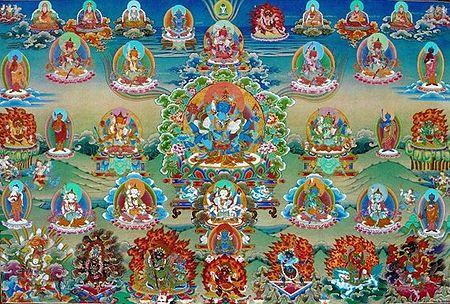
The arrogant fools of the academic world and many ignorant believers and followers of eastern religions and western esotericism do not know that the gods of the pagans do exist literally and that one has to take their existence very seriously in order to completely understand their philosophical structure. I have been stating for a long time that there is an astonishing degree of similarities between Neoplatonism, Neoplatonic Christianity, Tibetan Buddhism and the historical Vedic religion and in relation to that these three terminologies Deity Yoga in the Vedic religion, Yidam worship in Tibetan Buddhism and Theurgy in Neoplatonism takes my argument to a much more solid level.
Deity Yoga
Yoga itself is a religion, its neither a set of philosophies or a set of stretchy exercises instead it is a set of rituals to achieve union with the pagan deities.
At each and every step of sun salutations we utter magical spells to pagan gods silently in the mind.
1
ॐ मित्राय नमः
om mitrāya namaḥ
2
ॐ रवये नमः
om ravaye namaḥ
3
ॐ सूर्याय नमः
om sūryāya namaḥ
4
ॐ भानवे नमः
om bhānave namaḥ
5
ॐ खगाय नमः
om khagāya namaḥ
6
ॐ पूष्णे नमः
om pūṣṇe namaḥ
7
ॐ हिरण्यगर्भाय नमः
om hiraṇya garbhāya namaḥ
8
ॐ मरीचये नमः
om marīcaye namaḥ
9
ॐ आदित्याय नमः
om ādityāya namaḥ
10
ॐ सवित्रे नमः
om savitre namaḥ
11
ॐ अर्काय नमः
om arkāya namaḥ
12
ॐ भास्कराय नमः
om bhāskarāya namaḥ
13
ॐ श्रीसवितृसूर्यनारायणाय नमः
om śrīsavitṛsūryanārāyaṇāya namaḥ
This generates a great efficacy in the transformation of our subtle bodies, nadis, pranic flow currents and chakras and pleases the pagan deities existing inside our subtle bodies who aid us in our spiritual enlightenment and in this way we attain the knowledge and wisdom of all the secret mysteries of the cosmos and gain mastery over nature and not become its slaves.
Yidam worship
Most secular Buddhists like Stephen Batchelor and Sam Harris and followers of Theravada Buddhism are not aware of the fact there are deities in Buddhism which exist literally and are not just symbolic or mere creations of the human mind. The modern world blurred by the scientific attitude looks so stupid in front of these traditions which possess ageless wisdom and truths about cosmos.
Hundred peaceful and wrathful deities of Tibetan Buddhism
What is Yidam practice?
Yidam (Tib. ཡི་དམ་, Wyl. yi dam; Skt. iṣṭadevatā) — one of the three roots,
the tutelary or chosen meditation deity, which is the root of spiritual
accomplishment. Yidams are often classified according to whether they
appear in peaceful and wrathful form.
Sogyal Rinpoche writes:
"In Tibetan Buddhism practitioners will have a yidam, that is, a practice of a particular buddha or deity
with which they have a strong karmic connection, which for them is an
embodiment of the truth, and which they invoke as the heart of their
practice. Since in their practice they have recognized the yidam as the
natural radiance of the enlightened mind, they are able to view the
appearances with this recognition, and let them arise as the deity."
What is the importance of Yidam practice?
Orgyen Tobgyal Rinpoche explains the importance of the yidam:
When we consider all the great masters of the Indian and Tibetan
traditions, we find that in every case, their accomplishment came about
through their practice of a yidam. They chose a deity
and guarded that practice like their very life force, and on the basis
of that complete commitment to the path of deity yoga, they practised
the stage of generation, the stage of completion, and integrated these arriving at their final realisation of complete accomplishment and enlightenment.
But nowadays there are people who say, “Oh, what a lot of bother! Deities and mantra,
I hate all that. I’m just going to meditate.” And they sit there, and
close their eyes, and that’s what they call practice. They say, “I just
want to do effortless meditation.” But as Dilgo Khyentse Rinpoche said, “Although there are people like that, I’ve not seen them gaining any sign of attainment.”
In one of the texts of Ratna Lingpa’s cycle of Vajrakilaya practice, there is a passage which recounts how on one occasion Yeshe Tsogyal asked Guru Rinpoche about the nature of kyérim
practice. “Do we really need a yidam deity?”, she questioned. Guru
Rinpoche replied, “If there is no yidam, where is the source of siddhis? Without siddhi, how could there be enlightenment?”
In fact, if we look at the great masters of the Indian and Tibetan traditions of Vajrayana practice, we find there is no-one who did not meditate upon a yidam deity.
In the Nyingmapa school, all the great vidyadharas have had a main yidam deity which they practised. If their practice was of a peaceful deity, it was almost always Vajrasattva. If it was a wrathful deity, it was almost always Vajrakilaya. Guru Rinpoche and Vimalamitra themselves attested to the fact that Vajrakilaya was their yidam deity.
Nowadays however, the Nyingmapas are perhaps the worst when it comes to practising a yidam on a daily basis. When Jamyang Khyentse Chökyi Lodrö was giving the Rinchen Terdzö empowerment,
he scolded us as Nyingmapa practitioners and said, “You Nyingmapas
don’t do any kind of regular daily practice. You don’t even say the Sampa Lhundrupma prayer; you just lie around all day! We Sakyapas must do the path empowerment practice of Hevajra
every day , which takes about two or three hours. You don’t do
anything. You just lie around. You don’t do any kind of regular
practice.”
He said to us, “If you want yidam deities, you Nyingmapas have
more than anybody.” He showed us all the texts of the Rinchen Terdzö,
which consists of dozens and dozens of volumes, and said, “This is
filled with sadhanas of the three roots—lama, yidam and dakini—but none
of you practises any of them.”
What he said was true. Perhaps the reason is that so many of us in the Nyingma tradition place great emphasis on the Dzogchen
tradition and its effortlessness. Often we make the mistake of just
paying lip service to effortlessness, while really just being kind of
lazy.
Look at someone like Kyabje Dilgo Khyentse Rinpoche. No-one
would question that his realisation was higher than anyone’s, and yet
day and night he would recite prayers and mantras and do his practice.
And he was inseparable from Vimalamitra! Look at the kind of effort that
he put into his practice. Then there are others who just don’t do very
much of that at all. They just sit there with their mouths open.
On one occasion, I asked Dilgo Khyentse Rinpoche, “Is it
necessary for someone with realization to recite prayers and mantras?”
And he replied, “Someone who has that kind of realisation is like space.
What harm could recitation possibly do to space?” And he continued, “To
recite even a single mani mantra, or to recite the Vajra Guru mantra a few times, is only going to help. It’s not going to hurt, is it?”
I couldn't agree more with what Orgyen Tobgyal Rinpoche has said here. He is absolutely right when he said that the great accomplishments of Indian and Tibetan masters came only from the worship of a pagan deity. A typical example is Ramakrishna Paramahamsa who was the teacher of Swami Vivekananda and all his accomplishments came only after he obtained the grace of goddess mother Kali. All the modern practitioners blinded by the stupid scientific attitude ignore the pagan gods and blindly go after knowing Brhaman and Nirvana and as you can see despite all their efforts for over a century or so they fail to produce a single mastery over nature or also called as siddhis. Why? its mainly because they follow the path of emptiness and they do not worship the pagan gods because for many westerners it is an embarrassment to worship pagan deities because it would undermine their stupid spiritual but not religious life.
No wonder why many of the extraordinary supernatural powers that can be performed by following eastern mystical practices are rarely demonstrated nowadays.
Eight primary siddhis
In Hinduism eight siddhis (Ashta Siddhi) are known:
Aṇimā: reducing one's body even to the size of an atom
Mahima: expanding one's body to an infinitely large size
Garima: becoming infinitely heavy
Laghima: becoming almost weightless
Prāpti: having unrestricted access to all places
Prākāmya: realizing whatever one desires
Iṣṭva: possessing absolute lordship
Vaśtva: the power to subjugate all
Bhagavata Purana
Five siddhis of yoga and meditation
In the Bhagavata Purana, the five siddhis of yoga and meditation are:
tri-kāla-jñatvam: knowing the past, present and future
advandvam: tolerance of heat, cold and other dualities
para citta ādi abhijñatā: knowing the minds of others and so on
agni arka ambu viṣa ādīnām pratiṣṭambhaḥ: checking the influence of fire, sun, water, poison, and so on
aparājayah: remaining unconquered by others
Ten secondary siddhis
In the Bhagavata Purana, Lord Krishna describes the ten secondary siddhis as:
anūrmi-mattvam: Being undisturbed by hunger, thirst, and other bodily appetites
dūra-śravaṇa: Hearing things far away
dūra-darśanam: Seeing things far away
manaḥ-javah: Moving the body wherever thought goes (teleportation/astral projection)
kāma-rūpam: Assuming any form desired
para-kāya praveśanam: Entering the bodies of others
sva-chanda mṛtyuh: Dying when one desires
devānām saha krīḍā anudarśanam: Witnessing and participating in the pastimes of the gods
yathā sańkalpa saḿsiddhiḥ: Perfect accomplishment of one's determination
ājñā apratihatā gatiḥ: Orders or commands being unimpeded
Samkhya
In the Samkhya Karika
and Tattva Samasa there are references to the attainment of eight
siddhis by which one becomes free of the pain of ignorance, one gains
knowledge, and experiences bliss. The eight siddhis hinted at by Kapila in the Tattvasamasa are as explained in verse 51 of Samkhyakarika:
Uuha: based on the samskaras of previous births, the
attainment of knowledge about the twenty-four Tatwas gained by examining
the determinable and the indeterminable conscious and the non-conscious
constituents of creation,
Shabad: knowledge gained by associating with an enlightened person (Guru – upadesh),
Addhyyan: knowledge gained through study of the Vedas and other standard ancillary texts,
Suhritprapti: knowledge gained from a kind-hearted person, while engaged in the spread of knowledge
Daan: knowledge gained regardless of one’s own needs while
attending to the requirements of those engaged in the search of the
highest truth,
Aadhyaatmik dukkh-haan: freedom from pain, disappointment,
etc. that may arise due to lack of spiritual, metaphysical, mystic
knowledge and experience,
Aadhibhautik dukkh-haan: freedom from pain etc. arising from possessing and being attached to various materialistic gains,
Aadhidaivik dukkh-haan: freedom from pain etc. caused by fate or due to reliance on fate.
In Yidam practice one surrenders his individuality and attains oneness with the deity as explained below in Advice on Yidam practice.
“I am the great and glorious Heruka!
My food is the life-force of living beings,
My seat, the three worlds and three planes of existence.
I am the Lama. I am the Yidam.
I am Samantabhadra, the mighty Vajradhāra.
Without me, in the time before me,
There was no saṃsāra, no transcendence.
Now, the phenomena of saṃsāra and nirvāṇa
Are all perfect within me, the great Heruka.
The blazing fire mountain is my realm.
The vīras and ḍākinīs are my retinue.
The Great Perfection is my Dharma.
I am the Heruka of equalness and perfection.”
At all times, such pride is necessary.
By Shenphenpa (Khenpo Shenga). Translated by Adam Pearcey, Rigpa Translations, 2013.
Theurgy
Theurgy (/ˈθiːɜrdʒi/; from Greek θεουργία) describes the practice
of rituals, sometimes seen as magical in nature, performed with the
intention of invoking the action or evoking the presence of one or more
gods, especially with the goal of uniting with the divine, achieving
henosis, and perfecting oneself.
The great divine Iamblichus, Proclus and Julian the Emperor gave a great deal of emphasis to theurgy in Neoplatonism which the academic scholars still see it with contempt eyes without understanding the supra-rational character of the art of theurgy.
Proclus
(c. 480): theurgy is "a power higher than all human wisdom embracing
the blessings of divination, the purifying powers of initiation and in a
word all the operations of divine possession"
Julian the Emperor said in his Hymn to King Helios that no one knows about the subject more better than the Neo-platonic philosopher the divine Iamblichus.
The Emperor Julian the Apostate (332-363), embraced Neoplatonic philosophy and worked to replace Christianity with a version of Neoplatonic paganism.
Because of his death and the hold mainstream Christianity had over the
empire at the time, this was ultimately unsuccessful, but he did produce
several works of philosophy and theology, including a popular hymn to the sun. In his theology, Helios, the sun, was the ideal example of the perfection of the gods and light, a symbol of divine emanation. He also held the mother goddess Cybele in high esteem.
Julian favored ritual theurgy, with an emphasis on sacrifice and prayer. He was heavily influenced by the ideas of Iamblichus.
I want to fulfil the dream of Julian, his great desire to revive the pagan mystery religions back to the roman empire which for unfortunate reasons failed to succeed after his reign.
"By magical incantation rapid rivers may
be made to run back to their fountains, the sea be congealed, winds
become destitute of spirit, the sun be held back in his course, the moon
be forced to scatter her foam, the stars be torn from their orbits, the
day be taken away, and the night be detained." - Iamblichus on the mysteries of Egyptians, Chaldeans and Assyrians.
"Theurgic union is attained only by the perfective operation of unspeakable acts correctly performed, acts which are beyond all understanding, and by the power of unutterable symbols which are intelligible only to the Gods"
As the reader can see these set of pagan ideas are at the core of pagan philosophy and their attitude towards nature and religion. All the pagan religions have a certain affinity towards the art of theurgy and in eastern religions it was called by different names that's all but the theory and the practice remains absolutely identical. I urge scholars, practitioners and believers around the world to not to distort eastern mysticism and western esotericism and undermine the existence of pagan gods and their culture and philosophy.
Earlier I made a post titled "The philosophical differences between Advaita, Buddhism and Samkhya" where I said that it was Shankara who took us out from the repeated onslaught of Buddhist philosophy and re-established the doctrine of Advaita all over India but if anyone had noticed carefully I said that even Shankara was too influenced by Buddhist philosophy and introduced his theory of Mayavada or illusionism into the Vedas and the Upanishads which is in complete variance with Indian philosophy which always considered the creator and the world to be real.
This post is just about that which refutes Shankara's theory of Mayavada or his theory of superimposition, a refutation which results in a wide range of implications for Indian philosophy which would place it along side Neo-platonism and Neo-platonic Christianity on a much firmer ground by embracing the philosophical position of Platonic realism. This is the reason why I'm a strong platonic realist and not an idealist or a scientific realist. Its also the same reason why I have not given up my works and has taken up celibacy or sannyasa ashrama.
Sri Aurobindo, the great mystic was the first to raise his strong voice against Shankara's theory of Mayavada and criticized him relentlessly through his voluminous works on the Vedas and especially on one important Upanishad of all which is the Isha Upanishad which forms the very soul of my research and my life.
Sri Aurobindo takes an all out attack on Shankara's theory of Mayavada using Isha Upanishad as his main scriptural source and I love every point he makes in his criticism.
The main obstacle that stands in the way of accepting the
straightforward meaning of the Isha Upanishad and rightly understanding
its inner truth about the Brahman, the Self and the Divine, is Mayavada,
Illusionism, preached by Shankaracharya and the commentary he wrote on
this Upanishad.
The one-pointed drive towards withdrawal that is
Illusionism and the much-praised inaction of the Sannyasi are completely
at variance with the Isha Upanishad.
If the meaning of the slokas is strained and tortured
to give an opposite sense, the solution of this quarrel becomes
impossible.
The Upanishad in which it is written: “Doing verily
works in this world one should wish to live a hundred years”, and again:
“Action cleaves not to a man” — the Upanishad which proclaims with
courage: “Into a blind darkness they enter who follow after the
Ignorance, they as if into a greater darkness who devote themselves to
the Knowledge alone”; and again says: “By the Birth one enjoys
Immortality”, how can that Upanishad be reconciled with Mayavada,
Illusionism and the path of withdrawal?
A highly erudite person, who was possibly the chief
sponsor of Monism in South India after Shankara, expunged it from the
list of the twelve Upanishads and installed the Nrisimhatapini in its
place.
Shankaracharya was not so daring as to alter the prevailing canon.
The Upanishad was a “Sruti” (heard scripture), and
Illusionism was a subject for inquiry in the “Sruti” and as such, he
assumed, the meaning of the “Sruti” could not but be favourable to real
Illusionism.
Even though I am from South India I completely agree with Sri Aurobindo here because one has to speak the truth and criticize the mistakes made by anyone even though he or she is an highly famous and a reputable person. No hard feelings here and we agree with everything Shankara says except his theory of Mayavada or his insistence that only Brahman is real and the world and God are unreal. This doctrine of Mayavada put forward by Shankara around 6th century has destroyed the all important Indian philosophy of Purva Mimamsa (deals with Vedic rituals) which is as important as Uttara Mimamsa (Vedanta - enquiry about Brahman) because one cannot exist without the other and this lack of knowledge of Purva Mimamsa and the Vedas is the main reason for all the confusion which exists in understanding the relationship between Ishavara, Prakrithi, Purusha and Jiva in Advaita which many followers face.
The truth has been buried under the carpet for well over 5000 years which is a very long time and this change of perspective has global ramifications because it shows that we have to seriously consider the Vedas and the Vedic deities in it to fully understand the true integral Advaita of the Vedic rishis as they viewed it who gave equal importance to both a personal God with innumerable qualities and an impersonal God without qualities. For many whose main mode of acquiring knowledge is through Logic and reason this is highly unacceptable as both of these concepts are contradictory notions and forces one to make the wrong conclusion that either one view has to be false and the other view has to be wrong but as Aurobindo says the great seer rishi Yajnavalkya at each step tramples at the Law of Contradiction and in each sloka announces its invalidity; he finds in the secret heart
of the opposites the place for the reconciliation and harmony of their
contradiction.
God is beyond logic and reason and yet many meta-physicians try to understand metaphysical concepts like God through logic and reason despite the fact that Kant destroyed the synthetic priori knowledge of metaphysics centuries ago and William of Ockham who postulated the occam's razor was himself a theist and he seems to have said that "only faith gives us access to theological truths. The ways of God are
not open to reason, for God has freely chosen to create a world and
establish a way of salvation within it apart from any necessary laws
that human logic or rationality can uncover."
Very few people are aware of the traditional interpretation as to how the Isha Upanishad came into existence in this world. It was actually revealed by the Sun God who is the master of the Vedas and the supreme God of the universe.
According to traditional accounts, Yājñavalkya was the son of Devarāta and was the pupil of sage Vaisampayana . Once, Vaisampayana
got angry with Yājñavalkya as the latter argued too much to separate
some latter additions to Yajurveda in being abler than other students.
The angry teacher asked his pupil Yājñavalkya to give back all the
knowledge of Yajurveda that he had taught him.
As per the demands of his Guru, Yājñavalkya vomited all the knowledge that he acquired from his teacher in form of digested food. Other disciples of Vaisampayana took the form of partridge
birds and consumed the digested knowledge (a metaphor for knowledge in
its simplified form without the complexities of the whole but the
simplicity of parts) because it was knowledge and they were very eager
to receive the same.
The Saṃskṛt name for partridge is "Tittiri". As the Tittiri (partridge) birds ate this Veda,
it is thenceforth called the Taittirīya Yajurveda. It is also known as
Kṛṣṇa Yajurveda or Black-Yajurveda on account of it being a vomited
substance. The Taittirīya Saṃhitā thus belongs to this Yajurveda.
Then Yājñavalkya determined not to have any human guru thereafter. Thus he began to propitiate the Sun God, Surya. Yājñavalkya worshipped and extolled the Sun, the master of the Vedas, for the purpose of acquiring the fresh Vedic portions not known to his preceptor, Vaiśampāyana.
The Sun God, pleased with Yājñavalkya penance, assumed the form of a
horse and graced the sage with such fresh portions of the Yajurveda as
were not known to any other. This portion of the Yajurveda goes by the
name of Śukla Yajurveda or White-Yajurveda on account of it being
revealed by Sun. It is also known as Vajasaneya Yajurveda, because it
was evolved in great rapidity by Sun who was in the form of a horse
through his manes.The rhythm of recital of these vedas is therefore to
the rhythm of the horse canter and distinguishes itself from the other
forms of veda recitals. In Sanskrit,
term "Vaji" means horse.
Yājñavalkya divided this Vajasaneya Yajurveda
again into fifteen branches, each branch comprising hundreds of Yajus
Mantras. Sages like Kanva, Madhyandina and others learnt those and Śukla Yajurveda branched into popular recensions named after them.
Every one cites the Isha Upanishad and interprets the text as though he is an all knowing god without showing any sensitivity, humility and thought to understand how the Shukla Yajurveda tradition interprets this particular Upanishad from the traditional point of view.
The Isha Upanishad introduces to us the
integral spiritual realisation and the principle of the integral yoga;
within a short space it resolves many difficult problems.
It is a śruti replete with sublime, profound and fathomless significances.
This Upanishad, concluded in eighteen slokas, explains in these small mantras many major truths of the world.
Such “infinite riches in a little room” can be found only in this śruti.
Synthesis of knowledge, synthesis of dharma, reconciliation and harmony of the opposites form the very soul of this Upanishad.
In Western philosophy there is a law called the law of contradiction, according to which opposites mutually exclude each other.
Two opposite propositions cannot hold good at the same
time, they cannot integrate; two opposite qualities cannot be
simultaneously true at the same place and in the same instrument.
According to this law, opposites cannot be reconciled or harmonised.
If the Divine is one, then however omnipotent He might be, He cannot be many.
The infinite cannot be finite.
It is impossible for the formless to assume form; if it assumes form, then it abrogates its formlessness.
The formula that the Brahman is at the same time with
and without attributes, which is exactly what the Upanishad also says
about God who is nirguṇo guṇī, with and without attributes, is not admitted by this logic.
If formlessness, oneness, infinity of the Brahman are
true, then attributes, forms, multiplicity and finiteness of the
Brahman are false; brahma satyam jaganmithyā, “the Brahman is the sole reality, the world is an illusion” — such a totally ruinous deduction is the final outcome of that philosophic dictum.
The Seer-Rishi of the Upanishad at each step tramples
on that law and in each sloka announces its invalidity; he finds in the
secret heart of the opposites the place for the reconciliation and
harmony of their contradiction.
The oneness of the universe in motion and the
immobile Purusha, enjoyment of all by renunciation of all, eternal
liberation by full action, perpetual stability of the Brahman in
movement, unbound and inconceivable motion in the eternal immobility,
the oneness of the Brahman without attributes and the Lord of the
universe with attributes, the inadequacy of Knowledge alone or of
Ignorance alone for attaining Immortality, Immortality obtained by
simultaneous worship of Knowledge and Ignorance, the supreme liberation
and realisation gained not by the constant cycle of birth, not by the
dissolution of birth but by simultaneous accomplishment of Birth and
Non-Birth, — these are the sublime principles loudly proclaimed by the
Upanishad.
Unfortunately there has been a great deal of unnecessary confusion regarding the meaning of this Upanishad.
Shankara is generally recognised as the most
important commentator of the Isha Upanishad, but if all these
conclusions are accepted, then Mayavada, the Illusionism of Shankara,
sinks in the bottomless ocean.
The founder of Mayavada is incomparable and immensely powerful among the philosophers.
Just as thirsty Balaram brought to his feet the
Yamuna unwilling to alter her course, by dragging and pulling her with a
plough, so also Shankara, finding this Upanishad destroyer of Mayavada
and standing across the path toward his destination, dragged and pulled
the meaning till it agreed with his own opinion.
One or two examples will suffice to show the miserable condition to which this Upanishad has been reduced by such treatment.
For a more deeper understanding of the differences between our integral Advaita and Shankara's Advaita please read Integral Advaitism by Sri Auorbindo by Ramachandra Mishra. I am very much happy that whatever I was arguing for well over five years or so slowly everything is reaching its fruition. But the job is not completed yet we still have to revive the Vedas, Neo-platonism and Neo-platonic Christianity and master it completely by uncovering the great mysteries hidden inside them.
"And what your European pundits say about the Aryans swooping down from some foreign land, snatching away the lands of the aborigines and settling in India by exterminating them, is all pure nonsense, foolish talk! In what Veda, in what Sukta do you find that the Aryans came into India from a foreign country? Where do you get the idea that they slaughtered the wild aborigines? What do you gain by talking such nonsense? Strange that our Indian scholars, too, say amen to them; and all these monstrous lies are being taught to our boys!... Whenever the Europeans find an opportunity, they exterminate the aborigines and settle down with ease and comfort on their lands; and therefore they think the Aryans must have done the same!... But where is your proof? Guess work? Then keep your fanciful ideas to yourself. I strongly protested against these ideas at the Paris Congress. I have been talking with the Indian and European savants on the subject, and hope to raise many objections to this theory in detail, when time permits. And this I say to you–to our pundits–also, ‘You are learned men, hunt up your old books and scriptures, please, and draw your own conclusions.’" - Swami Vivekananda
Professor Nicholas Kazanas statements are correct even though his understanding of the Vedic texts are not up to the mark with the more esoteric genuine interpretations of the traditional Indian Scholars. He is absolutely right when he said that I got interested in the Upanishads but later I found out that what was there in the Upanishads existed in the Vedas too. What most people fail to understand is that Upanishads are not the end of the Vedas and the start of a new period where they somehow throw away the rituals and gods in the Vedas and turn towards a more rational philosophical approach to the divine instead Upanishads are the ending message of the Vedas. Both the Vedas(rituals and gods) and the Upanishads should be taken together in a full context only then you will really understand the true doctrine of our ancients.
Brihadaranyaka Upanishad
III-ix-1: Then Vidagdha, the son of Sakala, asked him. ‘How many gods are there, Yajnavalkya ?’ Yajnavalkya decided it through this (group of Mantras known as) Nivid (saying), ‘As many as are indicated in the Nivid of the Visvadevas – three hundred and three, and three thousand and three’. ‘Very well’, said Sakalya, ‘how many gods exactly are there, Yajnavalkya ?’ ‘Thirty-three’. ‘Very well’, said the other, ‘how many gods exactly are there, Yajnavalkya ?’ ‘six’. ‘Very well’, said Sakalya, ‘how many gods exactly are there, Yajnavalkya ?’ ‘Three’. ‘Very well’, said the other, ‘how many gods exactly are there, Yajnavalkya ?’ ‘Two’. ‘Very well’, said Sakalya, ‘how many gods exactly are there, Yajnavalkya ?’ ‘One and a half’. ‘Very well’, said Sakalya, ‘how many gods exactly are there, Yajnavalkya ?’ ‘One’. ‘Very well’, said Sakalya, ‘which are those three hundred and three and three thousand and three ?’
III-ix-2: Yajnavalkya said, ‘these are but the manifestation of them, but there are only thirty-three gods.’ ‘Which are those thirty-three ?’ ‘The eight Vasus, the eleven Rudras and the twelve Adityas – these are thirty-one and Indra and Prajapati make up the thirty-three’.
III-ix-3: ‘Which are the Vasus /’ ‘Fire, the earth, air, the sky, the sun, heaven, the moon and the stars – these are the Vasus, for in these all this is placed; therefore they are called Vasus.’
III-ix-4: ‘Which are the Rudras ?’ ‘The ten organs in the human body, with the mind as the eleventh. When they depart from this mortal body, they make (one’s relatives) weep. Because they then make them weep, therefore they are called Rudras.’
III-ix-5: ‘Which are the Adityas ?’ ‘The twelve months (are parts) of a year; these are the Adityas, for they go taking all this with them. Because they go taking all this with them, therefore they are called Adityas.’
III-ix-6: ‘Which is Indra, and which is Prajapati ?’ ‘The cloud itself is Indra, and the sacrifice is Prajapati’. ‘Which is the cloud ?’ ‘Thunder (strength).’ ‘Which is the sacrifice ?’ ‘Animals’.
III-ix-7: ‘Which are the six (gods) ?’ ‘Fire, the earth, air, the sky, the sun, and heaven – these are the six. Because all those (gods) are (comprised in) these six.’
III-ix-8: ‘Which are the three gods ?’ ‘These three worlds alone, because in these all those gods are comprised.’ ‘Which are the two gods ?’ ‘Matter and the vital force.’ ‘Which are the one and a half ?’ ‘This (air) that blows.’
III-ix-9: ‘Regarding this some say, ‘Since the air blows as one substance, how can it be one and a half ?’ ‘ It is one and a half because through its presence all this attains surpassing glory’. ‘Which is the one god ?’ ‘The vital force (Hiranyagarbha); it is Brahman, which is called Tyat (that).’
These gods should not be confused with the forces of nature instead they are anthropomorphic beings who exist in the Pleroma and this world is just a shadow image of the real things, the thing in itself that exists in the Pleroma or the Agnisoma Mandala. There are two ways to percieve this universe one is Bahirmukh and the other one is Antharmukh. Bahirmukh is the normal perception, this is the world as it appears to us, the world of phenomena, the world of science and Antharmukh is the world as it really exists independent of us, the thing in itself, the world of noumena. Let's keep science and religion separate, science is one thing and religion is another do not get confused with both of them.
The first thing that is taught in the Upanishads is this to understand the difference between Bahirmukh and Anthurmukh and only after you have attained the ability to perceive the world by being Antharmukh you will have the authority to study the next stage of philosophical scriptures. Only such persons are true philosophers because they know the things as it exists and not how it appears to us and when we ask what is this world made of they will not quarrel among themselves as the world is made of this or that, they will firmly assert that the world is made of 'That' which is beyond reason and sight but accessible only through experiential knowledge.


 sole reality, the world is an illusion” — such a totally ruinous deduction is the final outcome of that philosophic dictum.